
Flint Township City Directory Collections
Flint Township does not maintain one complete municipal directory shelf online. The dependable starting points are a verified University of Michigan digitization and local contacts who can identify material by title, place wording, and year. Treat broad local-holdings reports as leads until staff confirms the exact volume. That distinction prevents a City of Flint entry, a county directory, or a rural-route listing from being mistaken for a complete Flint Township record.
| Collection | Years | Where Held | Access |
|---|---|---|---|
| Flint City Directories | 1894 verified item | Google Books, digitized by the University of Michigan | Public viewer with OCR and page images |
| Flint Michigan City Directory | Additional item, exact date run unverified | Google Books, University of Michigan digitization | Public item viewer; inspect its images |
| Flint and Genesee town or county directories | 1869-1980 is an unverified local-collection lead | Local library or history collection, custody to confirm | Ask staff for titles, years, and format |
| Reverse, criss-cross, and telephone volumes | Exact Flint Township years unverified | GDL McCarty or a historical collection | Request a shelf check before relying on a run |
The table separates what is verified from what still needs a shelf check. A missing year in a web viewer does not prove the volume was never printed or that no copy survives locally.
When requesting a volume, give staff the surname, likely address, place wording, and a narrow year range. Ask whether the item is on a public shelf, microfilm, a digital database, or offsite storage, and whether a reverse or street-order companion exists. Record the library's answer with the title and publication year. That makes a later search repeatable and avoids turning a tentative holdings lead into a claimed collection run.
Flint Township City Directory, 1894
The verified Flint City Directories item in Google Books is a University of Michigan digitization published in 1894. It is a regional Flint source, not a guarantee that every Flint Township household appears under that place name. Search surname variants and initials, then inspect the page image before treating an OCR result as a transcription.
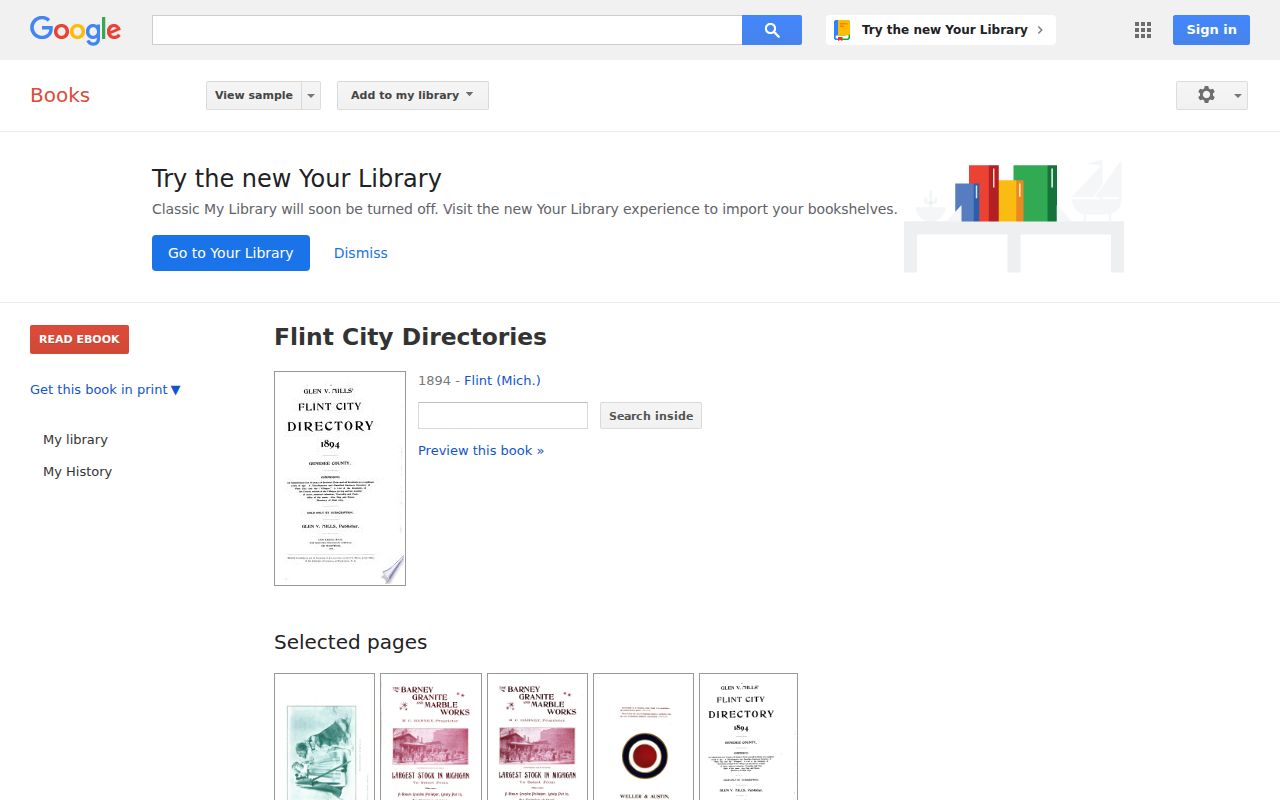
The item view is useful for locating a volume and its publication metadata. A page image remains the evidence for a name, street number, abbreviation, or punctuation mark that the optical character recognition may have read incorrectly.
Older township households can turn up under Flint, a village, a rural delivery description, or a post-office heading. Keep the place wording exactly as printed and test it against an address, spouse, occupation, or legal-description clue from another record.
Save the page number or image location as well as the search result. Viewer metadata can identify the item, but a household claim needs the actual printed line. If a surname only appears in OCR, try a shortened name, an initial, and the nearby letters on the scan before treating the result as a miss.
Flint Township City Directory Shelf Leads
Genesee District Library's Flint Township-McCarty branch is at 2071 S Graham Road, Flint, MI 48532, and can be reached at 810-732-9150. Posted hours are Monday and Wednesday 10-6, Tuesday and Thursday 12-8, Saturday 9-5, and closed Friday and Sunday. Public computers and Wi-Fi are available, although GDL says a library card is needed for computer use.
Its accessible branch page does not verify precise local holdings for city directories, reverse or criss-cross volumes, old phone books, obituaries, yearbooks, or newspaper microfilm. Ask staff for a title-and-year inventory and say “Flint Township” as well as “City of Flint.” That focused request can uncover rural-route or regional indexing that a broad name search misses.
The Genesee County Historical Society Ask the Archivist route is another appropriate place for a narrowly framed surname, neighborhood, building, or photograph question.
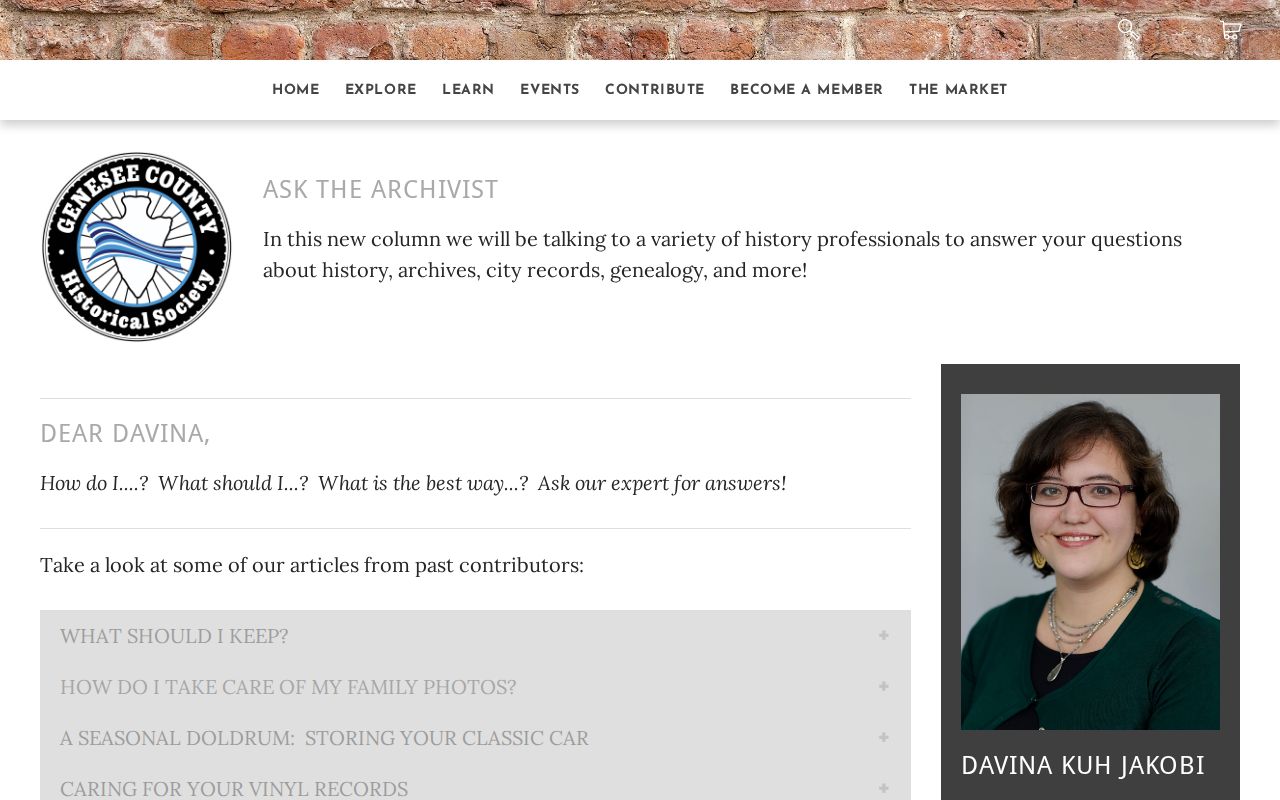
The Society documents Genesee County history, but its current directory, obituary, and fee holdings were not verified in the research. Ask whether the archivist can identify a specific collection rather than assuming a full searchable resident list exists.
Note: GDL computer sessions are listed as 60 minutes, with an extension possible when no one is waiting.
Reading a Flint Township City Directory Entry
A directory entry is a compact lead, not a complete profile. The accessible 1894 viewer did not supply a stable, fully legible Flint sample or a printed abbreviation key. The inventory below describes fields to capture only when they appear on the image. Do not expand a mark using a key from a different city or year.
| Name | Surname, given name, or initials exactly as printed. |
|---|---|
| Family marker | A spouse in parentheses or a widow notation, if the volume uses one. |
| Work line | Occupation, employer, or business wording when present. |
| Address | Street number, street name, rural route, or other printed location. |
| Status mark | Any owner, renter, householder, or residence notation only after checking that volume's key. |
- Criss-cross directory
- A later directory section arranged by street and number, used to look from an address toward listed occupants. Flint Township coverage and years need confirmation.
- Householder index
- A name arrangement intended to identify the principal listed household member. It may omit boarders, children, or other residents.
- Abbreviation key
- The volume's own list of shortened terms and marks. Photograph or transcribe it before interpreting the entry.
An entry can name a working adult without listing every person in the home. A boarder, a child, or a renter may be absent, while a business address can be printed instead of a residence. Read the directory as a dated publisher-selected listing, then use census, probate, or property sources for a fuller household question.
Flint Township City Directory OCR Checks
OCR is a finding aid. It can confuse initials, abbreviations, surnames, and street numbers, especially on small type or curved scans. Use the search result to reach a likely page, then compare the enlarged image character by character. Preserve uncertain letters in notes rather than quietly normalizing them.
Industrial-era households can appear with married names, ethnic spelling variants, initials, rural-route descriptions, company-associated addresses, or an occupation line. A same-address match is stronger when a spouse, employer, or work line agrees too. If a number changes, use a parcel or legal-description trail before calling it a move.
Pair Flint Township City Directory Years With Census
Federal census material is public through 1950 under the 72-year release rule. A census supplies a household snapshot, while a city directory can help place people between census dates. Census enumeration geography and rural routes do not always align with today's postal address, so use both sources with the deed or parcel trail.
A directory can record a move between census years, but publication and moving dates do not always line up. Match the street number carefully, and keep enumeration-district differences in mind for rural or township addresses. A household match should rest on several details, not just a familiar last name.
- Find the earliest credible directory appearance and record each detail exactly as printed.
- Check one or two directory years on either side for moves, changing initials, or a new spouse notation.
- Match the likely address and household to the nearest public census year, without assuming the same street label survived unchanged.
- Use a deed, parcel card, obituary, or probate file to test a move, death, or ownership change.
- Keep conflicts visible in the research notes until an original record resolves them.
The Archives of Michigan county guides can point toward older Genesee record groups and partner repositories. Reading-room users should request collections one to two weeks ahead.
Flint Township's Scattered Directory Story
Genesee County was organized in 1836, and its historical trail is split among county books, township registers, state systems, printed directories, and archives. The first verified Flint directory item is the 1894 U-M digitization. A reported 1869-1980 local directory span remains a lead, not a confirmed publication run.
That split reflects local geography. A dense Flint city directory may sit beside rural delivery descriptions, plat names, parcel legal descriptions, and township records for families living nearby. A failed modern search can mean the wrong custody path was chosen, not that a person or event never appeared in a record.
The Archives county guide lists examples of Genesee business, cemetery, voter, naturalization, and census material, but it does not promise that every example names Flint Township. Ask for the correct township, precinct, date range, and record group. Archival arrangement may be by book, enumeration district, or register rather than by a modern street address.
Flint Township's 102-Sheet Directory Context
The Library of Congress 1914 Flint Sanborn map contains 102 sheets. Its building footprints, uses, materials, lot lines, and numbered addresses can explain why an address in a directory later looks different. It is structure evidence, not proof of who lived there or who owned the parcel.
Genesee County also lists historical aerial years from 1937 through 1997. Those images can show landscape or road-pattern change before a later permit or deed is found. Use the map alongside the directory, never as a substitute for an occupancy or title record.
Note: A Flint postal label, a ZIP code, and a City of Flint reference do not by themselves establish Flint Township jurisdiction.
Flint Township City Directory Endpoints
When a household vanishes from a directory, check a later address, an obituary, cemetery evidence, or Genesee probate material before drawing a conclusion. An obituary can supply relatives, a former address, and a death date, but it remains a secondary source. Probate records may identify an estate representative or heirs where public access permits.
Keep the original spelling, issue date, page image, and source link with every note. That small record of method makes it possible to revisit an uncertain match when a librarian, archivist, or later source supplies a missing detail.